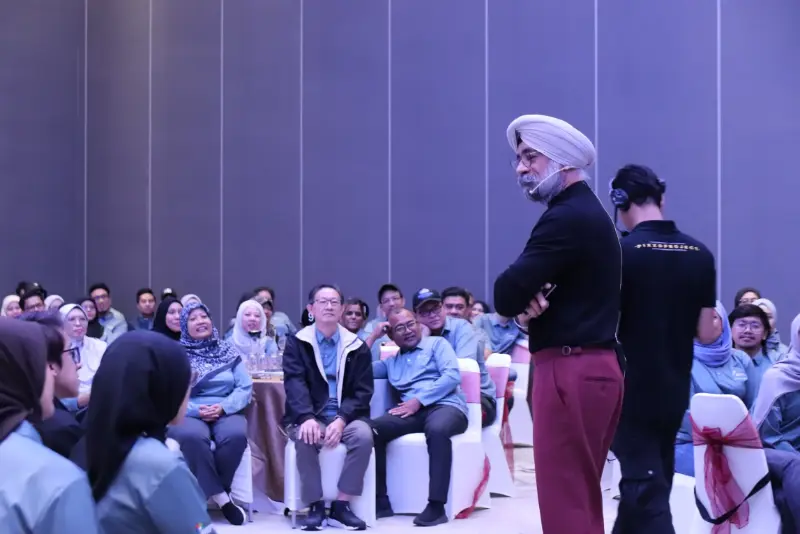
A Learning Edge trainer addressing a full room of employees during a culture programme session

Culture Transformation Malaysia

Culture does not change because you announced new values. It changes when people behave differently.

Most culture programmes produce a poster, a launch event, and a wave of energy that fades by the next quarter. We design culture transformation in Malaysia that lands where it counts: in the daily behaviour of leaders, managers, and teams.

Book a culture diagnostic
29+ years1000+ organisationsCulture work across GLCs, banks, and conglomerates

Why programmes miss

Why most culture programmes miss

A values rollout is easy to launch and hard to land. The launch is the part everyone gets right: the town hall, the framework, the laminated card. Then nothing in how people actually work changes, and within months the cynicism is worse than before you started.

Culture is not what you put on the wall. It is the behaviour people repeat when no one is watching. Values only matter when they become repeated behaviours, and that is a far harder thing to build than a communications campaign.

Negative culture spreads faster than positive culture. Which means a half-finished transformation does not sit still, it slides backwards. Two things decide which way it moves: whether your leaders model the behaviour in front of everyone else, and whether individual teams turn it into their own working agreements.

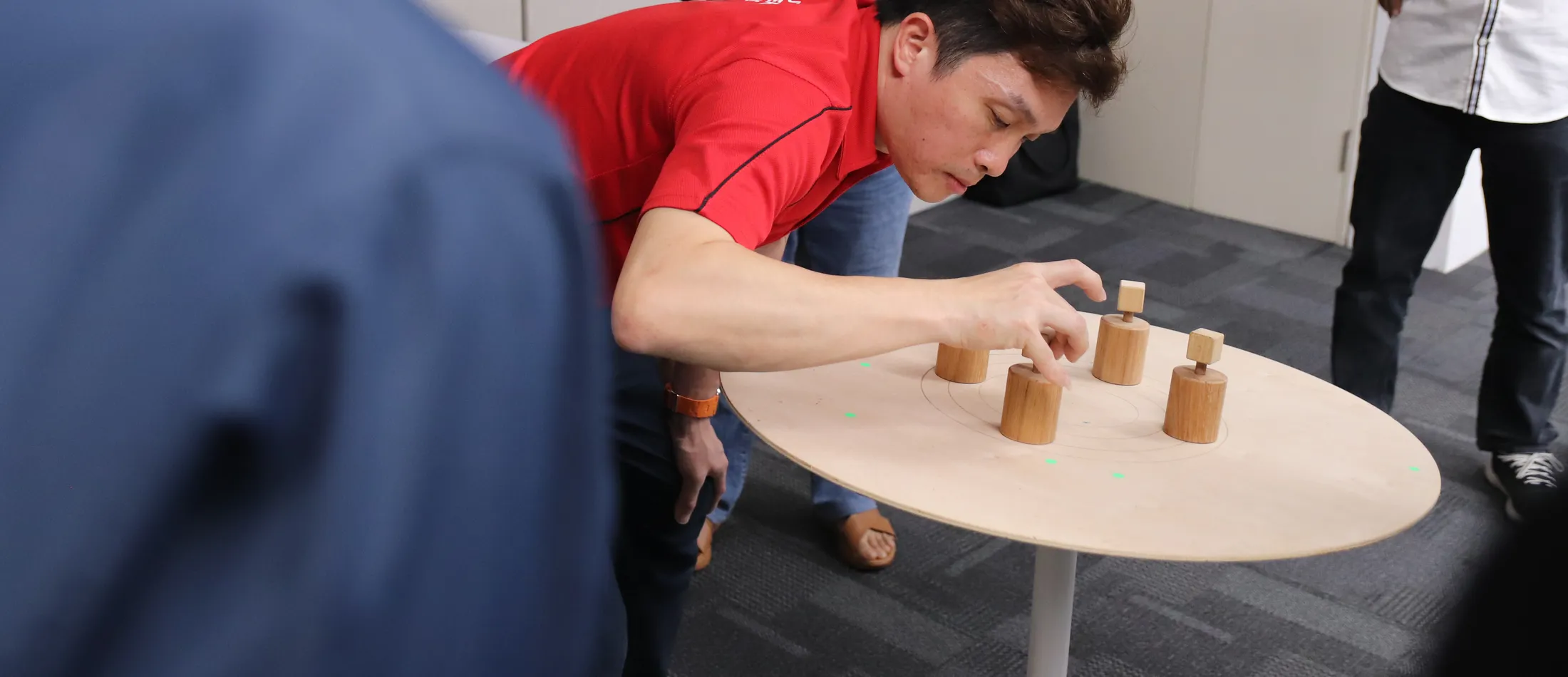
A Learning Edge trainer guiding a culture working session as participants define behaviours together

The process

Our 8-step culture transformation process

We treat culture transformation as a designed process with measurement at both ends, not a single event with good intentions. Work that runs across quarters rather than days is also where HRD Corp funding matters most to the business case.

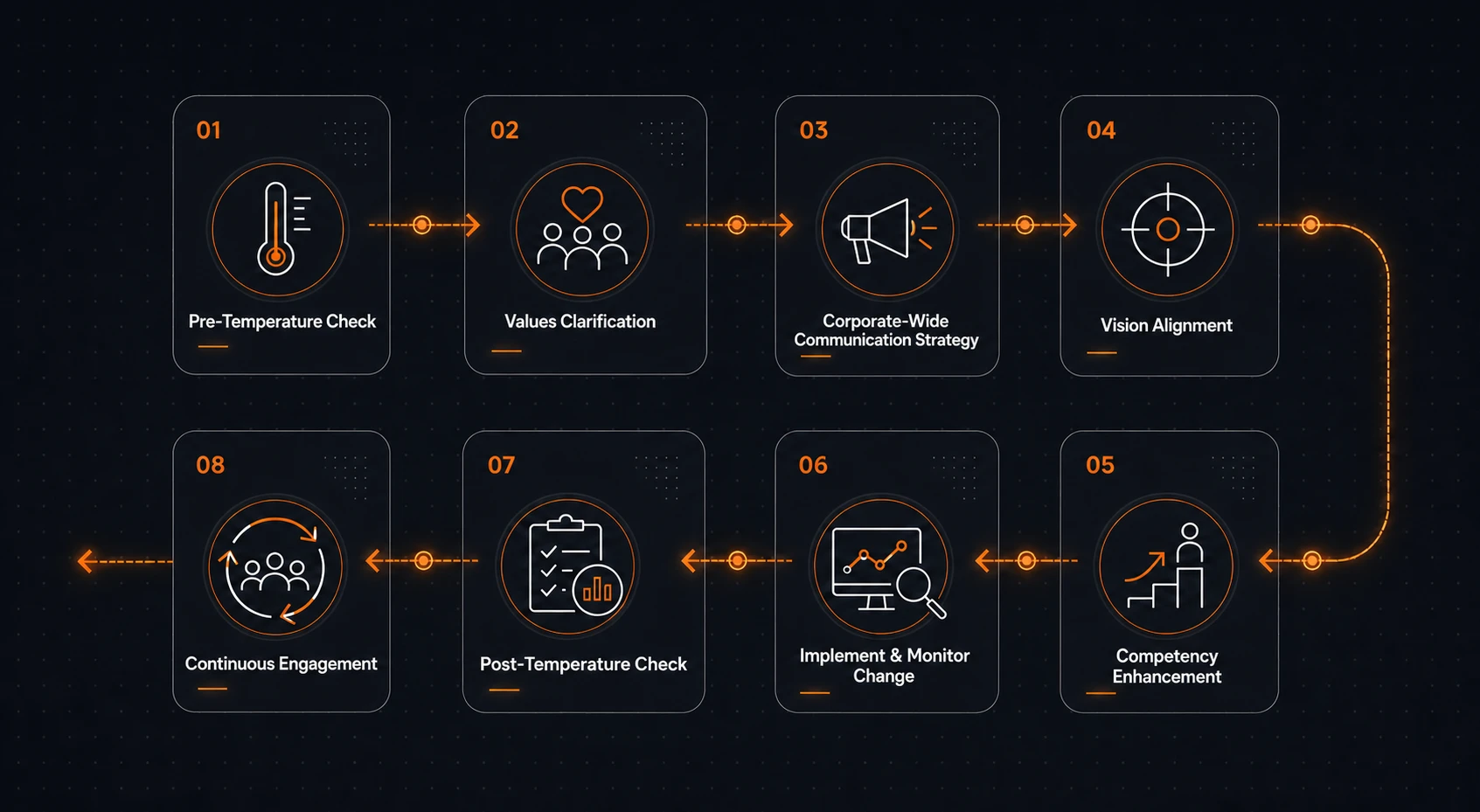
An infographic showing the eight-step culture transformation process: Pre-Temperature Check, Values Clarification, Corporate-Wide Communication Strategy, Vision Alignment, Competency Enhancement, Implement and Monitor Change, Post-Temperature Check, and Continuous Engagement
01

Pre-Temperature Check

We run the Employee Engagement Survey, Leadership Practices Inventory, and Patrick Lencioni surveys to assess the current culture and leadership. Outcome: identifies the strengths, gaps, and areas for improvement in workplace culture and leadership.

02

Values Clarification

We define the core values, align teams, and establish the foundation for a high-performance culture. Outcome: a clear, shared understanding of values and expectations across the organisation.

03

Corporate-Wide Communication Strategy

We share the survey results through town halls, leadership commitment videos, and FAQs. Outcome: transparency in the findings and management buy-in for the transformation.

04

Vision Alignment

We align leadership and employees on the organisation's long-term vision. Outcome: unified direction and clarity on strategic goals.

05

Competency Enhancement

We develop the leadership skills and behavioural competencies the new culture requires. Outcome: improved leadership effectiveness and capability building.

06

Implement & Monitor Change

We execute leadership initiatives, innovation sessions, and change ambassador programmes. Outcome: active participation, innovation, and reinforcement of the new behaviours.

07

Post-Temperature Check

We repeat the surveys after six months to measure progress. Outcome: an honest read on impact and where further refinement is needed.

08

Continuous Engagement

We introduce a learning management system, habit-building routines, and long-term engagement mechanisms. Outcome: sustained culture change and continuous performance improvement.

Starting points

Where culture transformation usually starts

Culture transformation

Across an enterprise or a division.

Values rollout

A rollout employees actually believe, not just receive.

Integration

Post-restructure and post-merger work where two cultures have to become one.

Change management

Through a new strategy, new CEO, or new operating model.

Momentum killers

Where most culture programmes lose momentum

Leaders exempt themselves

The moment people see the top team carry on as before, the programme is dead.

Values stay abstract

Respect and excellence mean nothing until someone defines what they look like on a Tuesday afternoon.

Middle managers are skipped

The layer that actually shapes daily experience is left to figure it out alone.

It is launched, then abandoned

Energy at kickoff, silence by Q2. No reinforcement, no re-measurement, no staying power.

Nobody measures behaviour

Without a before and after, you cannot tell whether anything changed or defend the spend.

The work, and what changed

Only sourced, client-approved evidence appears as completed proof.

Change management

A 21-Month Change Management Journey

MATRADE

Engagement score: 80.37% to 90.55%

A three-phase transformation journey built on listening, leadership alignment, middle-manager involvement, and visible culture activation.

“The programme helped bring vision and values into conversations middle managers could actually use, not just repeat.”

Programme participant, MATRADE
Enterprise culture alignment

One MH, One Journey

Malaysia Airlines

~8,000 employees reached, 45+ internal trainers developed

Culture values translated into observable, coachable behaviours anchored to real operational moments, scaled across the workforce with internal trainer capacity left behind.

“One MH became easier to explain when it was connected to real behaviours, not only campaign language.”

Programme participant, Malaysia Airlines
Service culture

Service Culture That Shows Up at the Frontline

Prasarana Malaysia Berhad

50% fewer behaviour-related complaints in 6 months

A national service-culture system combining frontline capability training, supervisor coaching, mystery-shopper audits, and governance to keep it running.

“The training helped us see customer experience as something we can coach daily, not just something measured after complaints come in.”

Programme participant, Prasarana
Values in banking

Making Values Operational in Investment Banking

CIMB Investment Bank

+23 pts risk-aligned decision consistency

A five-phase diagnose-to-measure engagement translating broad values into a behavioural operating code for client, risk, and execution routines.

“The value statements became more useful once we could see what they looked like in client conversations, risk decisions and team handovers.”

Programme participant, CIMB Investment Bank
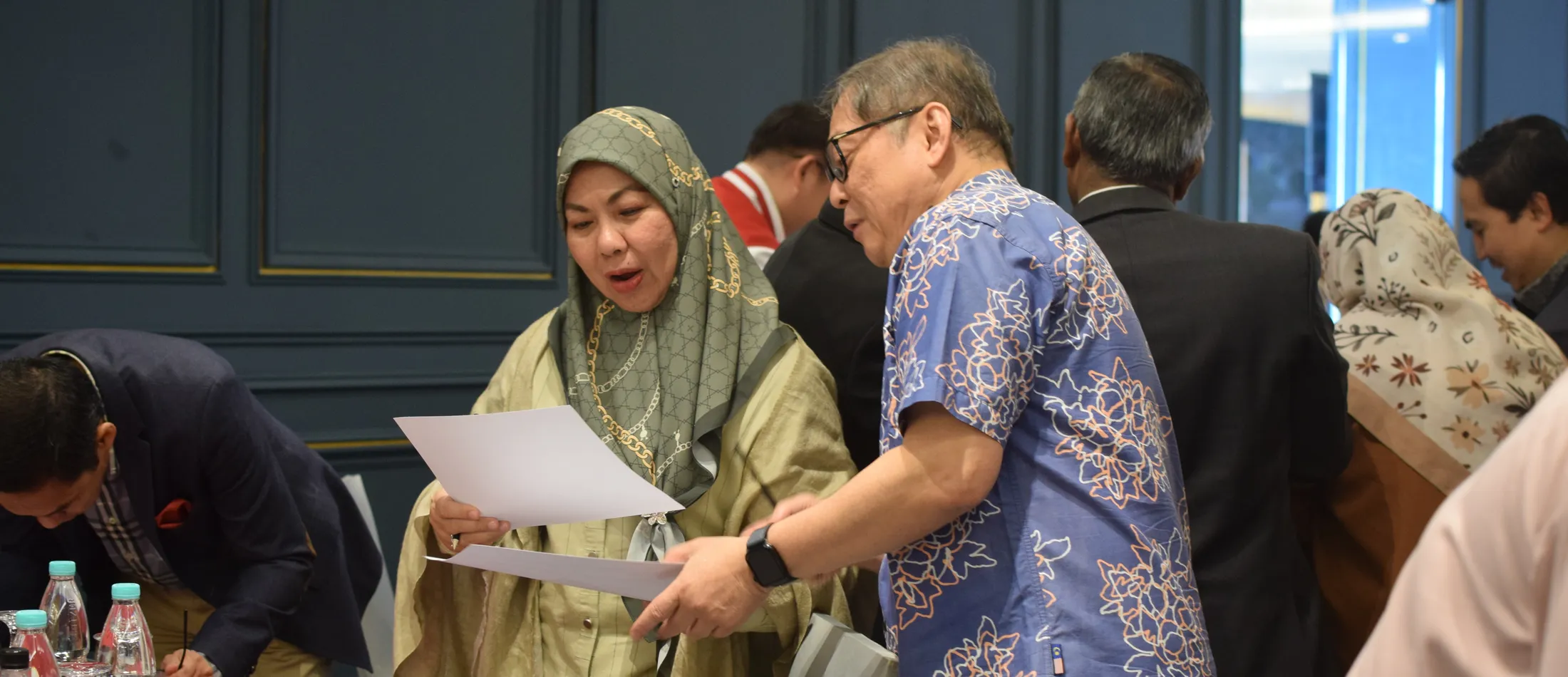
Two participants reviewing programme documents together during a culture transformation engagement

Questions, answered

Frequently asked questions

What does culture transformation actually change?

Not the poster on the wall. Culture is the behaviour people repeat when no one is watching, so the programme is designed to change daily behaviour, not just launch new values.

How do you measure whether culture has actually changed?

We run a Pre-Temperature Check at the start using engagement and leadership surveys, then repeat the same surveys around six months later as a Post-Temperature Check to see what actually moved.

Is this only for large organisations?

We work at both the enterprise and division level, and our culture work spans GLCs, banks, and conglomerates. The process is the same either way: diagnose first, then design around what is actually driving the culture.

Is this the same as a change management programme?

Change management is one of the situations that brings organisations to us, alongside values rollouts and post-merger integration. A new strategy, new CEO, or new operating model all need the same underlying discipline: turning the change into behaviour people actually adopt.

How do you get people to actually believe a new set of values, not just receive them?

A values rollout only works when it is a rollout employees believe, not just receive. That means defining what the values look like as concrete, observable behaviour at every level, not publishing a values statement and hoping it lands.

Why do most culture change programmes fail?

The launch is the easy part: the town hall, the framework, the laminated card. What most programmes get wrong is what happens after, when nothing in how people actually work changes and cynicism sets in. Negative culture also spreads faster than positive culture, so a half-finished transformation slides backwards rather than standing still.

Not a sales pitch. A diagnostic conversation.

Book a culture diagnostic.

Before anyone proposes a programme, it is worth understanding what is actually driving your culture today. Tell us what's not sticking, and we will take it from there.

Book a culture diagnostic

We respond within one business day.